

Skin & Hair Changes in Menopause: Understanding What’s Happening and How to Support Healthy Ageing
Hello and welcome to the Menopause & Me community,
Menopause and the years leading up to it can bring noticeable changes to skin and hair. Many women report dryness, changes in texture, thinning hair, or differences in how their skin responds to products that once worked well.
These changes are common and biologically driven. This newsletter explains why they occur and outlines evidence-based ways to support skin and hair health during midlife. (click on the arrow to the left to open the full article)

Why Skin Changes Occur in Menopause
Oestrogen plays an important role in maintaining skin structure and function. As levels decline during perimenopause and menopause, several changes can occur:
Reduced collagen production and accelerated collagen breakdown
Decreased skin thickness and elasticity
Reduced natural oils and hydration
Impaired skin barrier function
Research suggests that up to 30 percent of skin collagen may be lost within the first five years after menopause, with ongoing gradual decline thereafter.
Common skin changes reported include:
Dryness, itching, or increased sensitivity
Fine lines and deeper wrinkles
Loss of firmness or sagging
Changes in pigmentation or uneven tone
Adult-onset or persistent acne related to hormonal fluctuation

Why Hair Changes Occur in Menopause
Hair growth is influenced by hormonal balance. As oestrogen and progesterone levels fall:
The active (growth) phase of the hair cycle shortens
Hair follicles may become smaller over time
Relative androgen activity may increase
As a result, many women notice:
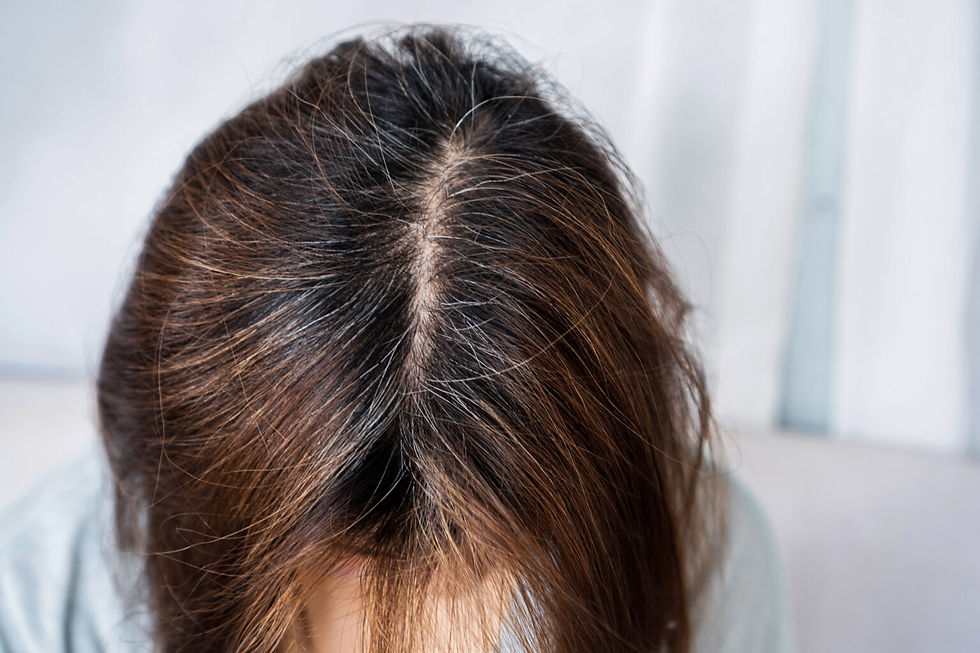
Diffuse thinning or widening of the part (female-pattern hair thinning)
Dry, brittle hair texture
Slower regrowth
Increased facial hair in some areas
Evidence-Based Ways to Support Skin and Hair Health
Lifestyle and topical care remain first-line strategies:
Use gentle cleansers and moisturisers containing ceramides or hyaluronic acid
Apply broad-spectrum sunscreen daily
Introduce retinoids or peptides gradually if appropriate
Ensure adequate dietary protein, essential fats, and antioxidants
Prioritise sleep and stress management
Hormone therapy:For women who are suitable candidates, menopause hormone therapy has been shown to improve skin hydration, elasticity, and collagen content. Evidence for direct benefits on scalp hair is more limited and outcomes vary between individuals.
A Simple 3-Step Approach
Observe and track changes
Photos or brief journaling can help identify patterns over time.
Seek a clinical review
Other contributors such as iron deficiency, thyroid conditions, nutritional gaps, or dermatological conditions should be considered.
Ask targeted questions
“Which skincare, hair treatments, or medical options are appropriate for me?”
If you’d like support or a personalised plan, you can reach me at:
Warmly,JennaNurse Practitioner & Menopause Educator
Sources
Australasian Menopause Society | North American Menopause Society | International Menopause Society | European Menopause and Andropause Society | Brincat M et al. Skin ageing and menopause. Climacteric | Thornton MJ. Oestrogen and hair follicle biology. Journal of Endocrinology | Affinito P et al. Effects of hormone therapy on skin collagen. Maturitas
Important Disclaimer: The information in this blog/newsletter is general in nature and intended for educational purposes only. It is not a substitute for professional medical advice, diagnosis, or treatment. Always seek the advice of your Nurse Practitioner, doctor, or another qualified health practitioner with any questions you may have regarding a medical condition or before commencing any new treatment, exercise program, changing your diet, or taking supplements – particularly if you have existing health conditions, are on medication, or have had fractures or falls in the past. Individual needs and responses vary.



Comments